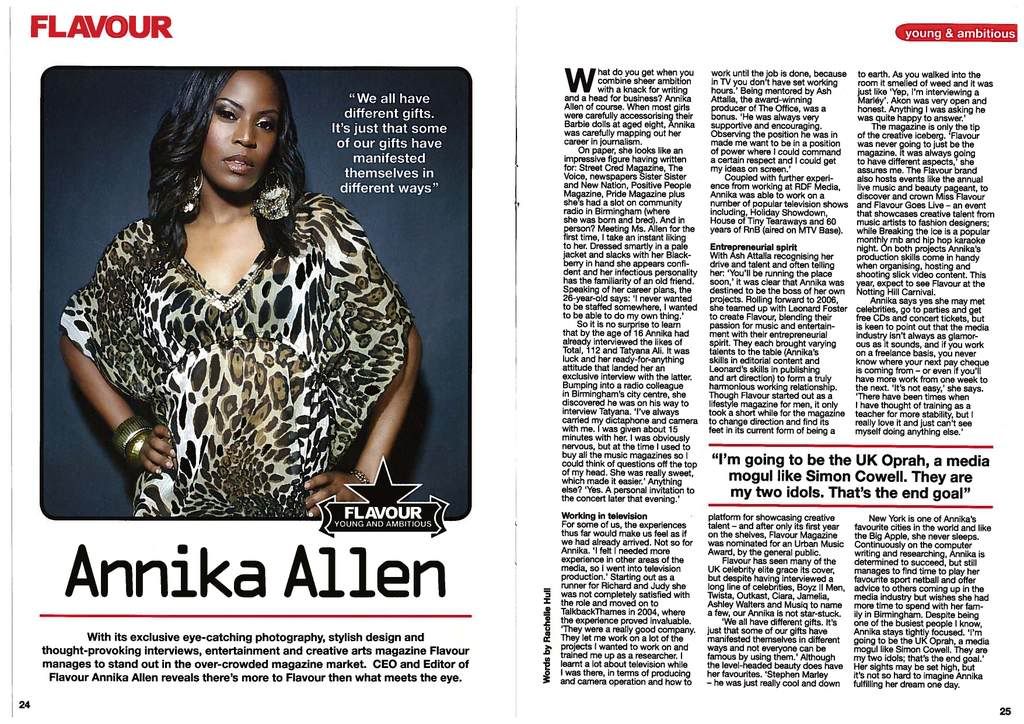
CEO: Annika Allen
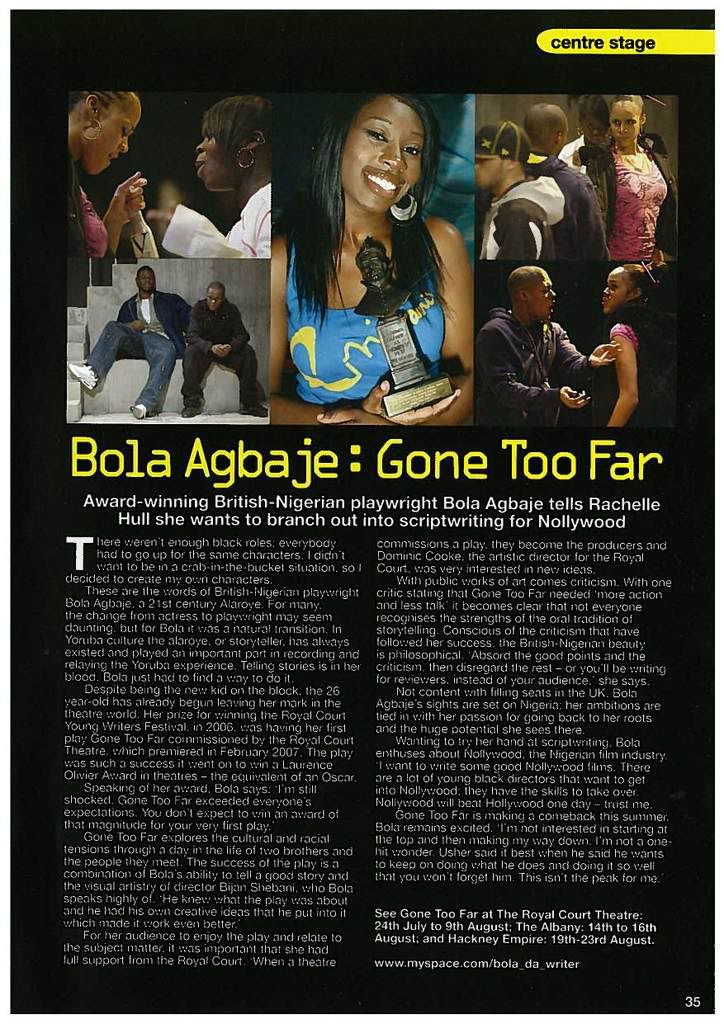
AWARD-WINNING PLAYWRIGHT: Bola Agbaje
DIRECTOR: Loraine Ffrench


 © Rachelle Hull
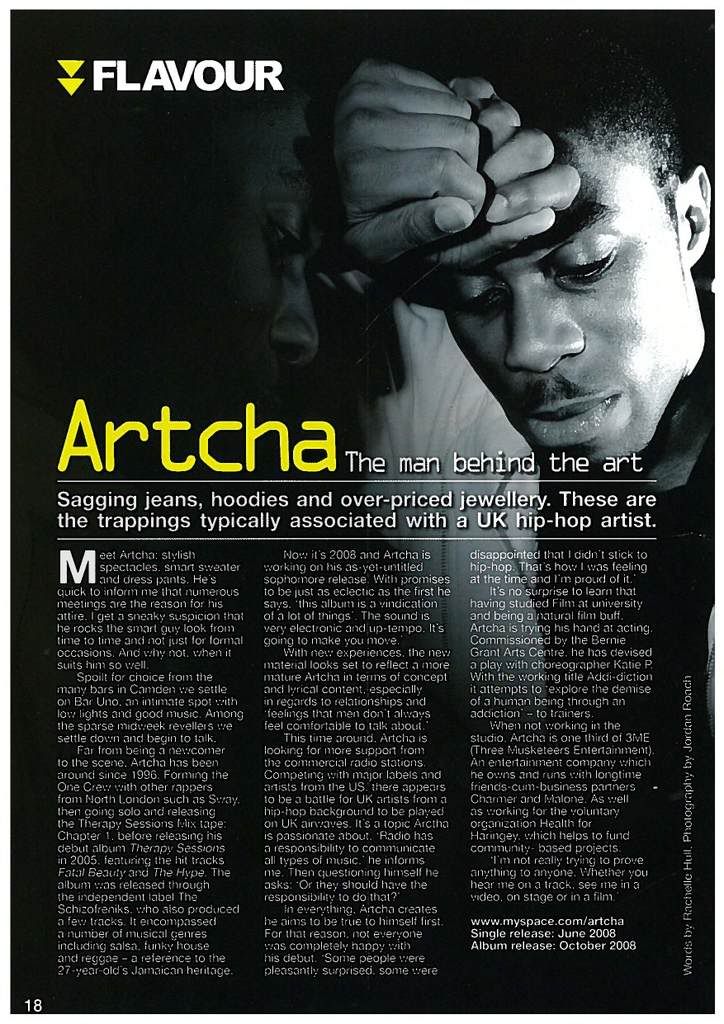
With an abrupt entrance, Artcha James and Katie P filled the small stage at the Bernie Grant Arts Centre. I was seated perfectly to watch both performers, as they stood in their positions: Katie lay sprawled on the floor, juxtaposed with Artcha's upright and rigid form. They maintained this for a little longer than necessary and with the promise of 'movement' in the advertising campaign, for a moment I thought I was watching the wrong play.
Adi-diction is about a young man by the name of Joe, who is addicted to trainers (hence the play on the word Adidas and Addiction to form the title). The 'story' does not unfold with your typical beginning, middle and end. Instead, it reveals itself in a sequence of soliloquies and confessions to the audience, often accompanied by music. Starting with Artcha, Joe's struggle is evident as he attempts to theorise the problem. Meanwhile Katie skips the bull and breaks it down, educating us on the variation of brands and styles: Adidas, Nike, Puma, Reebok, Airforce 1, Classic, Airmax, Superstar, Finster, Shox, Campus. Not being a connoisseur of trainers, I was lost among the lengthy list; but was quickly brought back into the fold, when the words 'honeydew', 'French lavender' and 'sweet cotton' escaped her lips - transporting me into her candy coloured world of laces and leather.
Whilst Artcha's role is evident from the get-go, Katie's takes a while to come to light. At one point she curled into the foetal position around Artcha's feet and as he stood, feet cocooned and lost in her embrace, I mistook her for a metaphor. Further on I realised Katie was not there to symbolise the trainer, both Artcha and Katie are Joe, just different sides of the same person. This is classic Freud: the ego and the id, the reality principle and the pleasure principle. Katie revels in the addiction, Artcha philosophizes it. A clever twist occurs when towards the end of the play you see Artcha change into the id, as Katie becomes the ego.
The clarity of roles makes for a more interesting play as it allows you to place yourself in the situation, substituting the trainer for your own vice. The ability to become so caught up in something, or someone, comes so easily to many of us that we are often unaware it is happening.
Although both performers were comfortable in front of their audience I was somewhat distracted by the often awkward mirroring of each other's movements across the stage. I understand the purpose, to convey the confusion and miasma, but at times it looked as if they were moving to justify the use of the word in the play's promotion. Despite this their confidence is evident in their delivery, Artcha floats easily between conversational speech and rap and back again; whilst Katie's palette of emotion, from calm to humorous to rage, emphasises the psychosis of Joe's predicament.
Though not flawless, Adi-diction is an interesting exploration of how a passion for even the most innocent of trappings can spiral out of control.

© Rachelle Hull 2008

March 31st 2008:
Wise words spoken during one of Obama’s many speeches; Michelle that is – not Barrack. Throughout history the representation of the black woman has been less than favourable. She is often sexualised and dramatised, whether for comical effect or to further discredit the very foundations of a struggling nation. Her value in society shuffled around like a pack of cards – always the joker, but never the ace. Her very existence often laying at the bottom of the social ladder, or just simply ceasing to exist.
The many complexities of what it means to be a woman, first and foremost, are apparent. Added to this the identification with a race so full of riches and woe, it would seem there are many avenues to choose from. But that has not been the case, until now. Not for a long time has the representation in the media delivered so much promise.
Introducing Michelle Obama: a Vice President of community and external affairs for University of Chicago Hospitals and a graduate of both Princeton
I am often bombarded with women who appear to be mere shadows of those I identify with in my own home. Not ashamed of being ambitious, whilst drawing her own guidelines for success along the way and proud of being cultured and passionate beyond belief, I share an affinity with Michelle. For these are parts of the core values passed on to me, like heirlooms, from my mother.
It is rare to see us placed within a context; particularly one that is not limiting and void of any profundity. One dimensional characters are all too easily churned out for the masses to feast on and digest without complaint. All too often we are seen as carrying on in this world alone. According to the media, family is an alien concept for the black woman. With no support system, or rejecting the one that was offered we are portrayed as bitter from our experiences and lashing out at those who look most like us: the male and the female form.
So, what a breath of fresh air to see Michelle and the family unit intact: wholesome and tangible. She is not an apologist for drawing strength from this; recognising the benefits and holding fast. Nor is she an apologist for celebrating selfhood outside of her kin, instead she revels in the dynamics that complete her. She is a card-carrying member of Woman.



 Posts
All Comments


